Why is Cardiac Rehabilitation indispensable?
After a heart attack, heart surgery, or stent placement, it is normal to feel afraid of performing any physical effort, which leads to inactivity, progressive loss of physical conditioning, and insecurity in your daily life.
Exercising on your own without proper medical supervision increases the risk of adverse cardiovascular events, while prolonged bed rest further weakens your heart and needlessly delays your recovery.
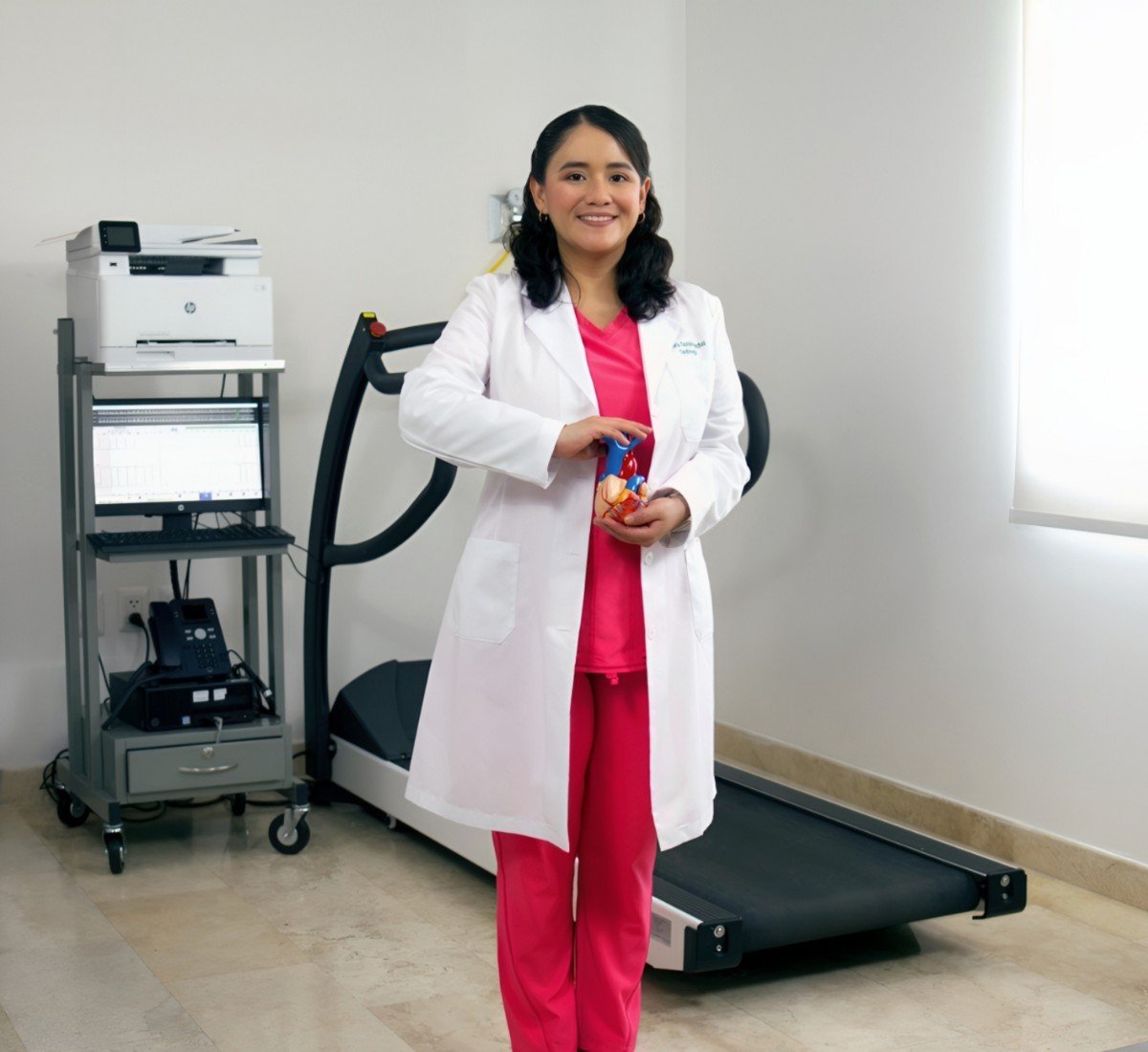
The medical program supervised by Dr. Karla Castolo, the only cardiologist in Puerto Vallarta, Bahía de Banderas, and Riviera Nayarit with High Specialty training in Cardiac Rehabilitation and Cardiovascular Disease Prevention, provides real-time monitoring and exercise tailored to your condition to rebuild strength and confidence.
Why should it be guided by a Cardiac Rehabilitation Specialist?
Unlike standard physical therapy or general personal training, this cardiac rehabilitation program is led by a cardiologist with formal High Specialty training. Dr. Castolo reviews your ECG and wireless telemetry in real time during exercise and adjusts the clinical plan when indicated.
Proven reduction in patients who complete the Phase II program (Class IA Recommendation by the AHA/ESC).
Major events are extremely rare (1 cardiac arrest per 111,996 h and 1 MI per 293,990 h of supervised exercise - AACVPR data).
What is Cardiac Rehabilitation?
Cardiac rehabilitation is a supervised medical program which combines controlled exercise, education, and follow-up to help you recover your physical condition and reduce risks, according to your diagnosis and evolution.
It is not just “going to the gym”. It is guided heart recovery with direct medical supervision.
For whom is it indicated?
This program is ideal if:
- You recently or months ago had a heart attack.
- You had a stent placed (angioplasty).
- You underwent cardiac surgery (bypass, valve repair/replacement).
- You live with stable heart failure or coronary artery disease.
- You have high cardiovascular risk and want to prevent complications.
- You want to resume physical activity but feel fear or uncertainty.
What does the program include?
Initial Evaluation
Definition of capacity, symptoms, and safety objectives through baseline tests.
Supervised Exercise
Gradual progression of physical effort intensity under continuous monitoring.
Practical Education
Learn about proper medication management, blood pressure self-monitoring, and heart-healthy habits.
Follow-up
Medical adjustments of medications and lifestyle coaching according to your clinical progress.
How does it work?
Initial Cardiological Assessment
In-depth medical history, physical examination, and detailed review of your previous studies to stratify your cardiovascular risk.
Customized Plan
Intensity, frequency, and realistic goals are defined specifically for your heart. There are no generic prescriptions: the entire plan is individualized.
Supervised Sessions
You perform the exercise with continuous monitoring of vital signs. If anything changes, the program is adjusted immediately.
Monitoring and Autonomy
Medical treatment adjustments, continuing education, and recommendations so that you can eventually exercise safely on your own.
Phase II Supervised Program with Telemetry
The core recovery program is Phase II (supervised outpatient rehabilitation), which begins after your hospital discharge from a heart attack, heart surgery, or stent placement. It typically consists of 24 to 36 sessions (3 times a week, 60 to 75 minutes each) customized to your heart's specific capacity.
During each session at Hospiten Puerto Vallarta, you perform a tailored aerobic and light resistance exercise circuit under continuous wireless telemetry monitoring in real time. This allows us to watch your heart rhythm, ECG tracing, blood pressure, and oxygen saturation minute-by-minute, maximizing clinical safety and adjusting exercise intensity dynamically.
What can you expect from the program?
Progressive physical recovery: Rebuild strength, stamina, and functional capacity for daily activities such as walking, climbing stairs, or returning to work.
Overcoming fear of exertion: Under close medical supervision, you learn to identify real cardiac warning signs versus normal physical fatigue, helping you rebuild confidence.
Comprehensive risk control: Practical guidance and counseling to optimize your cholesterol, blood sugar, weight, and blood pressure levels, significantly lowering the risk of future events.
Reimbursement documentation: We provide detailed initial assessments, telemetry session logs, and, when required, medical justification letters to support a reimbursement request according to your policy.
Recovery Tailored to Your Specific Situation
Every heart heals and adapts differently. We design your physical training based on your recent cardiovascular event:
Post-Myocardial Infarction (Heart Attack)
The primary goal is to recover the pumping strength of the damaged heart muscle without overloading it, promoting the formation of new blood vessels (collaterals) and overcoming the fear of physical exertion.
Post-Bypass Surgery or Valve Replacement
We focus on safe sternal healing, lung expansion, and restoring general mobility, dosing physical stress carefully to protect grafts or prosthetic valves.
Post-Stent Placement (Angioplastia)
We begin early mobilization and aerobic training to maximize coronary blood flow, establishing strict control of blood pressure and cholesterol to prevent new arterial blockages.
Stable Heart Failure
Specific training of peripheral and respiratory muscles to reduce fatigue and shortness of breath, helping the heart work more efficiently during daily tasks.
Investment and Insurance Coverage
Phase II cardiac rehabilitation may be reimbursable according to your Major Medical Insurance policy. Eligibility, requirements, authorization, and reimbursement amounts depend on your insurer and policy.
To facilitate your insurance reimbursement claim, we provide a complete medical file containing:
- Initial cardiology assessment with risk stratification.
- Signed telemetry reports and ECG logs from each exercise session.
- Periodic clinical reports showing your progressive functional recovery.
- Medical justification letter signed by the subspecialist cardiologist.
- Tax-deductible electronic invoice (CFDI).
Medical Stability Criteria
To begin the supervised exercise program, it is a strict requirement that you are clinically stable and have a formal discharge/referral from your treating cardiologist or surgeon. Patients with unstable angina, uncontrolled severe ventricular arrhythmias, or acute decompensated heart failure must be clinically stabilized prior to program candidacy.
Why choose Dr. Karla Castolo?
Dr. Karla Castolo
Clinical Cardiologist & Cardiac Rehabilitation Subspecialist
- High Specialty Training: Clinical cardiologist with High Specialty training in Cardiac Rehabilitation and Cardiovascular Disease Prevention from the National Institute of Cardiology Ignacio Chávez (INCICH).
- Unique in the region: The only cardiologist in Puerto Vallarta, Bahía de Banderas, and Riviera Nayarit with this formal High Specialty training.
- Premium Facility: The program is conducted inside Hospiten Puerto Vallarta (JCI Accredited) using state-of-the-art wireless medical telemetry equipment.
- Compassionate care: Thorough explanations of your diagnosis, empathy, patience, and close medical follow-up for a safe return to your daily routine.
- 100% Bilingual: Consultations and program sessions are available in both English and Spanish for the local expat community.