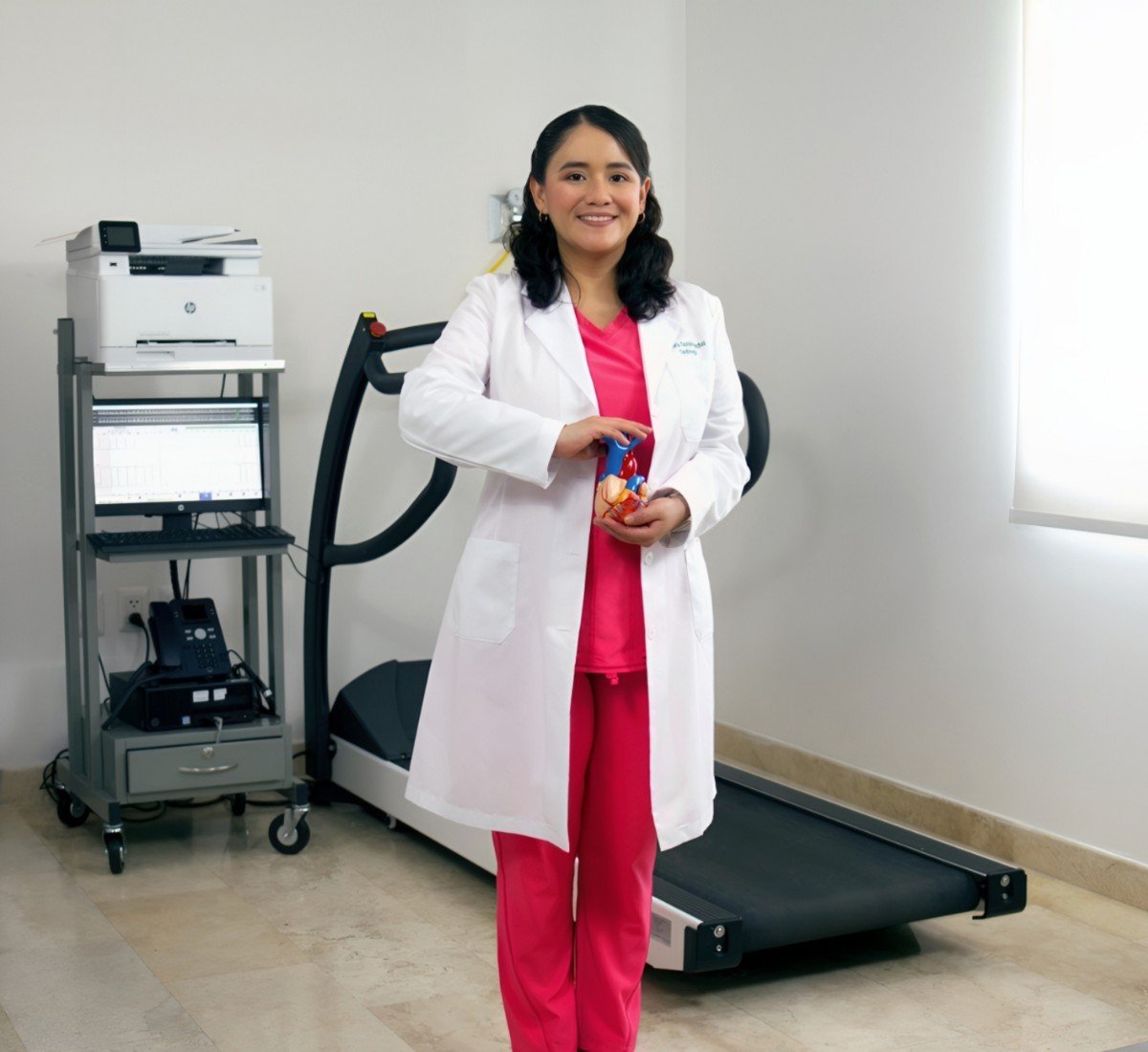
Why is a Pre-Sport Evaluation key?
Starting or resuming intense workouts (like gym, running, or crossfit) without knowing your real cardiovascular status exposes you to silent arrhythmias, extreme fatigue, or sudden fainting during exertion.
Ignoring minor symptoms like rapid palpitations or mild chest tightness, believing it is just "being out of shape," can trigger serious coronary problems or severe arrhythmias during vigorous exercise.
A pre-sport cardiovascular evaluation with Dr. Karla Castolo assesses your cardiac condition, identifies relevant findings, and guides exercise ranges and recommendations so you can train progressively according to your evaluation.
High Specialty
National Institute of Cardiology
Train Safely
Prevention during exertion
Fitness Suitability
Calculated Risk + Medical Advice
What is a pre-sport evaluation?
It is a medical assessment focused on your heart and your safety when exercising. Its purpose is to identify signs that suggest increased cardiovascular risk, clarify clinical symptoms, and define recommendations for training efficiently and safely.
An evaluation is recommended if:
- You are going to start exercising after months or years of a sedentary lifestyle.
- You want to significantly increase your intensity (marathon, HIIT, competitive sports training).
- You are over 35 years old and plan to perform vigorous intensity exercise.
- You have risk factors (hypertension, diabetes, smoking, or high cholesterol).
- You had a recent COVID-19 infection and experience unusual fatigue or palpitations when exercising.
- You have experienced discomfort such as chest pain, dizziness, or a feeling of fainting during exertion.
Evaluation of your cardiovascular health
The pre-sport medical consultation reviews key areas to assess your cardiovascular health and guide your training:
A) Warning Signals Detection
We investigate symptoms during exertion, such as chest pain or pressure, fainting (syncope) during training, disproportionate shortness of breath, or palpitations accompanied by dizziness.
B) Family Risk Analysis
Evaluation of family history of sudden death or premature cardiovascular disease in direct relatives, as well as suspected cardiomyopathies or hereditary arrhythmias.
C) Physical Examination
Measurement of blood pressure, careful auscultation to rule out abnormal heart murmurs, evaluation of peripheral pulses, and other physical signs.
How does the process work?
Definition of Objectives
We analyze your discipline, training level (recreational / competitive), frequency, volume, and estimated intensity to customize the evaluation.
Clinical Review
We review your complete medical history, cardiovascular risk factors, and perform a detailed physical examination focused on exercise safety.
Studies (if applicable)
Only if the history or physical examination suggests risk, we prescribe and interpret complementary tests to clarify findings (ECG, Stress Test).
Conclusion and Plan
We provide clear conclusions about your cardiovascular fitness, optimal heart rate training zones, and specific safety recommendations.
Studies that could be indicated
These diagnostic tools are selected based on your individual clinical profile:
Electrocardiogram (ECG)
Essential electrical recording to rule out silent arrhythmias, long QT syndrome, or other conduction abnormalities. Read more about ECG.
Doppler Echocardiogram
Heart ultrasound useful to rule out hypertrophic cardiomyopathy (a primary cause of cardiac events in young athletes) or structural valve defects. Read more about the Echocardiogram.
Stress Test
Shows how your heart reacts under physical effort load, ideal for evaluating real fitness and ruling out exercise-induced ischemia. Read more about the Stress Test.
What you get at the end
Suitability Conclusion
Clear determination of your current status: fit, fit with specific recommendations, or in need of further studies before training.
Exercise Prescription
Practical guidelines on ideal heart rate zones, recommended effort limits, and safe progression of your training.
Timely Detection
Quick identification of arrhythmias, effort-reactive hypertension, or conduction anomalies to manage them immediately.
Clinical Follow-up
Continuous monitoring for athletes with previously diagnosed cardiovascular conditions who seek to train safely.
When to pause exercise and consult
Immediately stop training and seek urgent cardiological review if you experience chest pain or pressure radiating to the jaw or arm, fainting during exertion, extreme shortness of breath not proportional to exertion, or rapid palpitations causing dizziness.
What we suggest preparing for your consultation
- List of medications you take (with dosages and schedules).
- Your most recent laboratory and imaging studies.
- Your sports goals and the type of training you plan to do (e.g., «running a half marathon», «crossfit», «cycling»).