What symptoms or cases is it used for?
A 24-hour MAPA (Ambulatory Blood Pressure Monitoring) study is indicated when office pressure readings do not reflect your true blood pressure profile or when we need to evaluate how it behaves during day, night, and sleep. It is frequently requested if:
- Your blood pressure readings vary significantly between consultations or home checks.
- There is suspicion of "white coat hypertension" (blood pressure is elevated only in the doctor's office).
- Suspicions of "masked hypertension" (readings are normal in the office, but high at home).
- We need to evaluate the efficacy, dosage, or scheduling of your antihypertensive medications.
- We need to check if your blood pressure drops properly during sleep (nocturnal dip).
How does it work?
The MAPA study (also known as ABPM) records your blood pressure automatically at programmed intervals for 24 hours. Because it measures pressure during daily activities, stress, rest, and sleep, it provides a comprehensive overview of your cardiovascular profile.
This dynamic assessment is crucial to detect nocturnal hypertension, morning surges, and to confirm or rule out true high blood pressure without errors.
What do you receive at the end?
- A detailed clinical report with averages, graphs, and stats for daytime, nighttime, and the full 24h period.
- A clear explanation of your blood pressure patterns and their clinical implications.
- A treatment roadmap (if required) recommending dosage adjustments, schedule tweaks, or preventive measures.
The Dr. Castolo Difference
The value of a 24-hour blood pressure monitor depends entirely on the accuracy of the correlation between the numbers and your daily log. Dr. Castolo personally cross-references your recorded measurements with your activity, medication, and sleep diary to rule out false spikes, identify true pathology, and design a customized, highly effective clinical strategy.
How is the study performed?
Cuff Placement
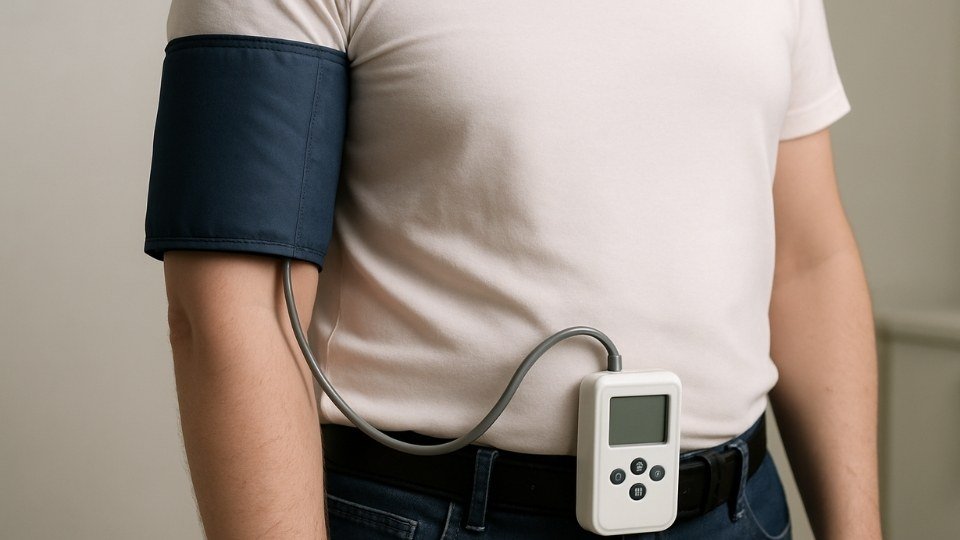
We adjust a blood pressure cuff around your non-dominant arm and connect it to a small digital recorder worn on your belt.
24h Monitoring
You go home and keep the device on during your daily routine and sleep. The cuff will inflate automatically every 15-20 minutes during the day, and every 30 minutes at night.
Activity Diary
You write down the times you eat, sleep, take medications, or experience stress or physical symptoms in a provided logbook.
Device Return and Analysis
You return the equipment the next day, and we analyze the complete log to deliver your results and clinical plan.