What symptoms or cases is it used for?
A cardiac stress test is highly useful to understand how your cardiovascular system behaves during exercise, not just at rest. It is frequently requested if you experience:
- Chest pain, tightness, or pressure during physical activity.
- Shortness of breath that feels disproportionate to your exertion level.
- Palpitations that occur specifically when walking, climbing stairs, or training.
- You want to start or resume a high-intensity exercise routine safely.
- We need to measure your functional capacity and physical exercise tolerance objectively.
How does it work?
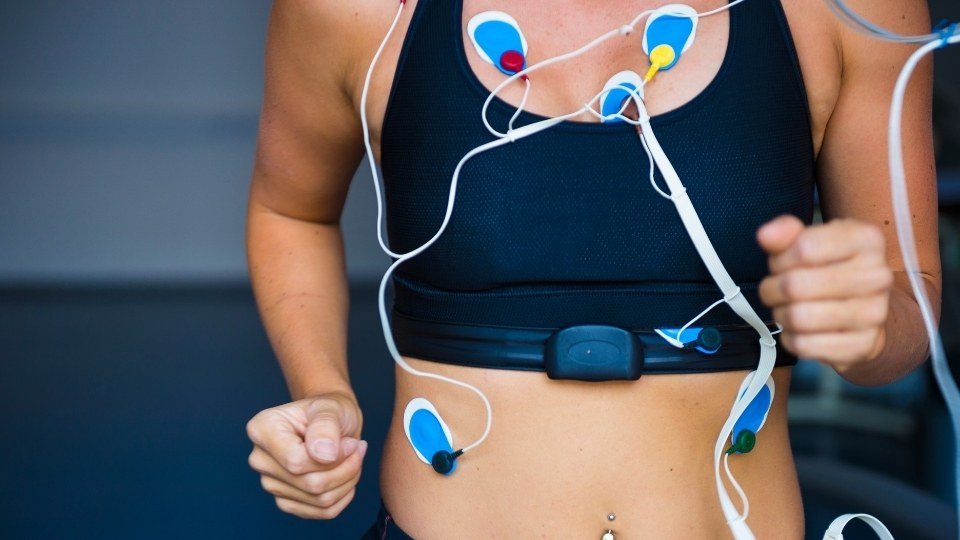
Ergometry is performed on a medical treadmill using a standardized protocol where the speed and incline increase progressively. Throughout the test, we record your ECG and measure your blood pressure at each stage.
Its main objective is to evaluate your cardiovascular system under stress, helping to identify silent ischemia, exercise-induced arrhythmias, and abnormal blood pressure responses.
What do you receive at the end?
- Detailed clinical report including ECG findings during peak exercise and recovery stages.
- Graph showing blood pressure and heart rate variations during exertion.
- Detailed calculation of your functional capacity (measured in METs) and safe training heart rate ranges.
The Dr. Castolo Difference
The value of a stress test is not in walking on the treadmill; it lies in the clinical interpretation and monitoring during the study. Dr. Karla Castolo, a certified cardiologist, personally supervises and interprets your stress test minute-by-minute at Hospiten Puerto Vallarta to monitor your response to exertion and make clinical decisions when relevant changes occur.
Furthermore, your official clinical report (both printed and digital) is prepared and delivered immediately after the test, allowing you to walk out with clear diagnoses and exercise recommendations without delay.
How is the study performed?
Initial Setup
We place ECG electrodes on your chest and take baseline blood pressure readings. We review instructions and verify that it is clinically safe to proceed.
Exercise Stages
You start walking on the treadmill. Every 3 minutes, the speed and incline increase slightly. We continuously monitor your cardiac rhythm, blood pressure, and symptoms.
Recovery Phase
Once you reach your target effort or need to stop, the treadmill slows down. We keep monitoring your vital signs for a few minutes while your heart rate returns to normal.
Report & Interpretation
We finalize the clinical reports and discuss the findings, heart capacity, and next steps immediately with you.