What symptoms does it help evaluate?
The 24-Hour Holter ECG is particularly useful when symptoms do not manifest during a short, resting office consultation. It records your rhythm over a complete day-night cycle, which is essential if you experience:
- Sporadic, brief, or highly intermittent palpitations.
- Episodes of rapid heart rate (tachycardia) or irregular beats that come and go.
- Unexplained dizziness, lightheadedness, or fainting (syncope) episodes.
- Cardiovascular symptoms that occur primarily at night or upon waking up.
How does it work?
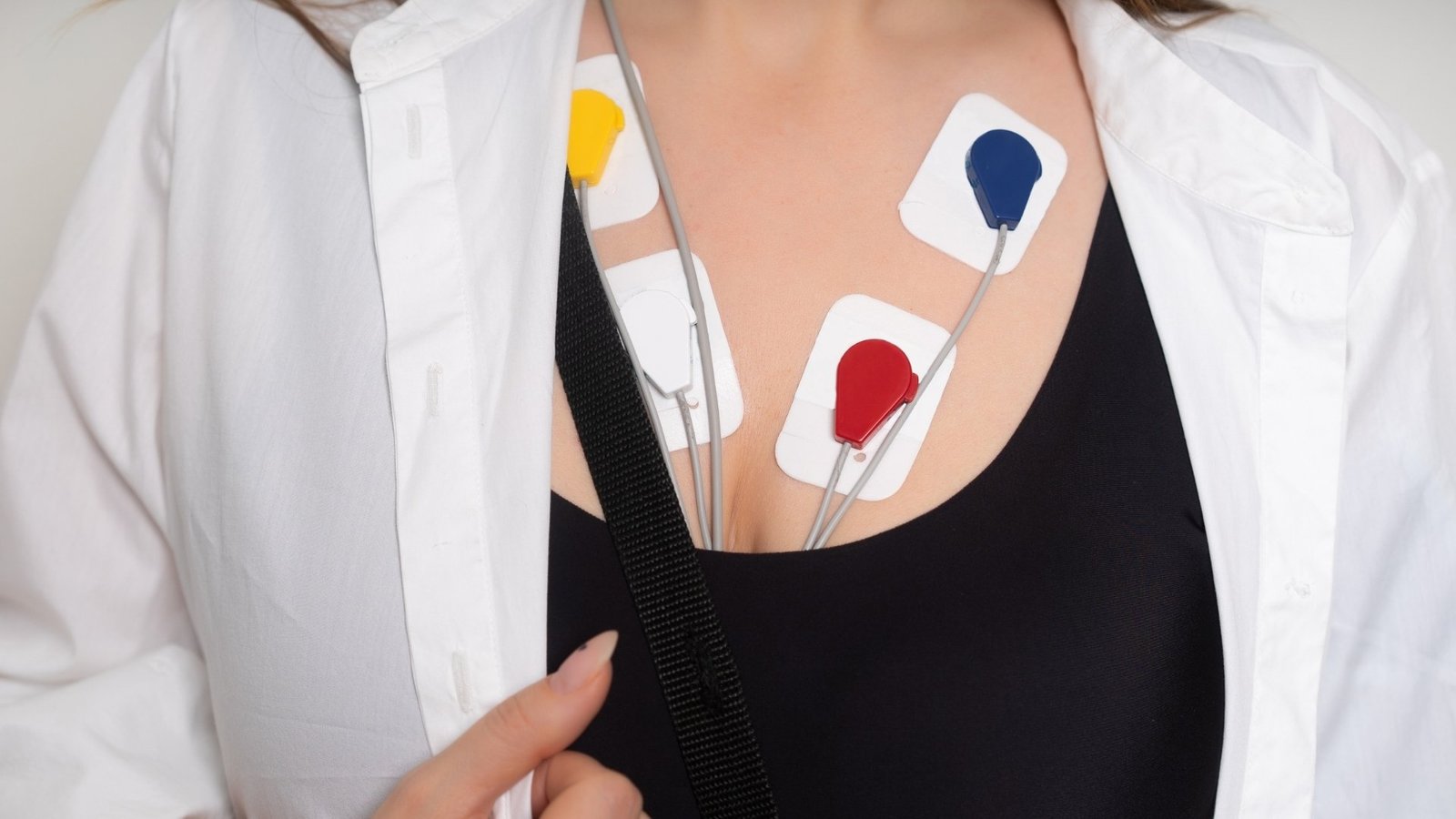
The Holter ECG is a portable, lightweight electrocardiogram monitor that records your heart's electrical signals continuously for 24 hours. Because you carry the device with you, it captures the heart's response to physical exertion, rest, emotional stress, and sleep.
Unlike a resting 10-second ECG, this ambulatory monitoring allows us to detect transient rhythm disturbances that might otherwise go unnoticed.
Our modern, compact digital recorder is designed to be comfortable and silent, enabling you to sleep and carry out your day without unnecessary disruptions. It evaluates critical cardiac conditions, including paroxysmal atrial fibrillation (AFib), premature ventricular contractions (PVCs), conduction blockages, and silent ischemia.
What do you receive at the end?
- A detailed clinical report compiling all recorded beats and anomalies.
- A clear correlation analysis between your logged activities/symptoms and the electrical signals.
- A diagnostic roadmap with recommendations: medical treatment, follow-up, or further tests.
The Dr. Castolo Difference
The true diagnostic power of a Holter test does not lie in the physical device itself, but in the clinical expertise used to review the massive amount of recorded data. Dr. Castolo personally analyzes the tracing, filtering noise from true clinical signals, and correlating them with your symptoms to deliver an accurate, actionable diagnosis.
How is the study performed?
Device Placement
At the office, we place several electrodes on your chest and connect them to a small, lightweight recorder carried in a comfortable belt or harness.
Ambulatory Recording
You go home and carry out your normal day, keeping the device secure, dry, and away from direct water (no showers or swimming during the 24 hours).
Symptom Log
You note down the time, activity, and any symptoms (e.g. palpitations, dizziness) in a small diary we provide.
Removal and Analysis
The next day, you return the device, we download the data, and Dr. Castolo interprets the results, preparing your final report.
Medical Insurance & Reimbursement
The study is paid directly at the time of your appointment. We provide clinical documentation so you can request reimbursement according to your policy:
- Tax-deductible fiscal invoice (CFDI).
- Detailed medical report signed by the specialist.
- Completed insurance company reimbursement forms.
- Standardized international clinical coding (ICD-10).
Authorization, requirements, and reimbursement amounts depend on each insurer and policy.