What symptoms does it help evaluate?
An ECG is highly useful when you need clarity about your heart rhythm or require a preventive cardiovascular evaluation. It is indicated if you experience:
- Palpitations, "flips", skipped beats, or irregular heartbeats.
- Dizziness, fainting, or unexplained feelings of weakness.
- Chest discomfort, tightness, or pressure.
- Control and monitoring of hypertension or other cardiovascular risk factors.
- Preoperative assessment prior to scheduled surgeries.
How does it work?
Each heartbeat starts with a natural electrical impulse. The electrocardiogram records this activity over time and converts it into a graphic tracing that allows the cardiologist to identify patterns relevant to your health.
Our study is performed with the clinical standard of 12 leads, which observes the electrical activity of the heart from different angles, providing comprehensive spatial diagnostic data.
Important note: The ECG represents a snapshot of a specific moment. If symptoms are transient or intermittent, continuous ambulatory monitoring (like a Holter) may be needed.
What do you receive at the end?
- A detailed clinical report signed by a certified cardiologist.
- A clear explanation of the findings, without complex medical jargon.
- Clear recommendations for the next steps, whether it is medical follow-up, lifestyle changes, or additional studies.
The Dr. Castolo Difference
The ECG is a common test, but the real value lies in who interprets it. Modern machines print automatic interpretations that are often incomplete or cause unnecessary alarm. Here, your tracing is analyzed clinically by a certified cardiologist, correlating it with your specific symptoms and medical background.
Our priority is not just to hand you a piece of paper, but to ensure you walk out with absolute clarity and a personalized action plan.
How is the study performed?
Preparation
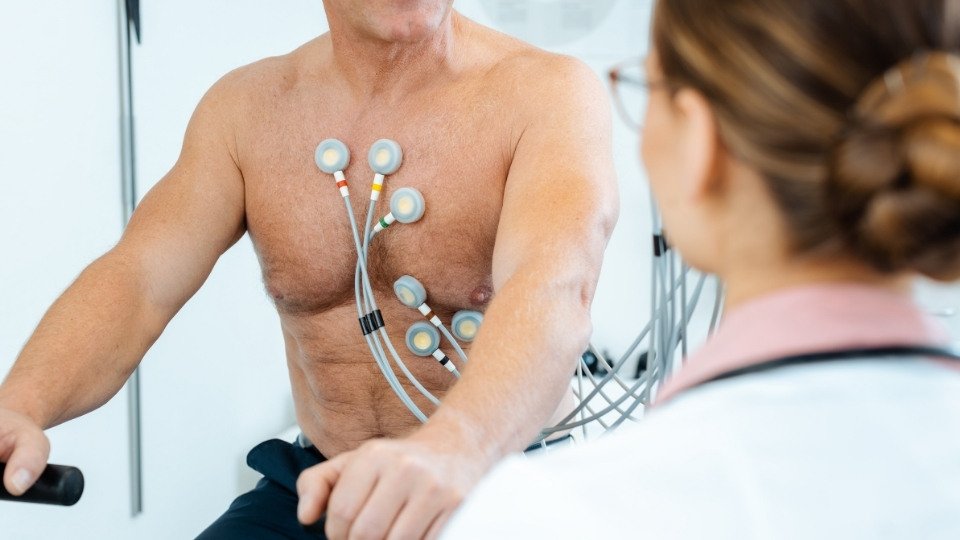
We clean the skin at specific points and place small, adhesive electrodes on your chest, arms, and legs.
Tracing Registration
You lie down comfortably, remaining still and breathing normally for a few minutes while the machine records the electrical impulses.
Clinical Review
Dr. Castolo analyzes the recorded tracing, correlating the results with your clinical history to produce the final diagnosis.