
Pre-sport evaluation in Puerto Vallarta
If you are going to start, resume or intensify exercise, this assessment helps to detect risks, clarify symptoms and define a safe training plan.
"Tell us your age, your sport and if you have symptoms; we will guide you with the first step."
High Specialty: National Institute of Cardiology
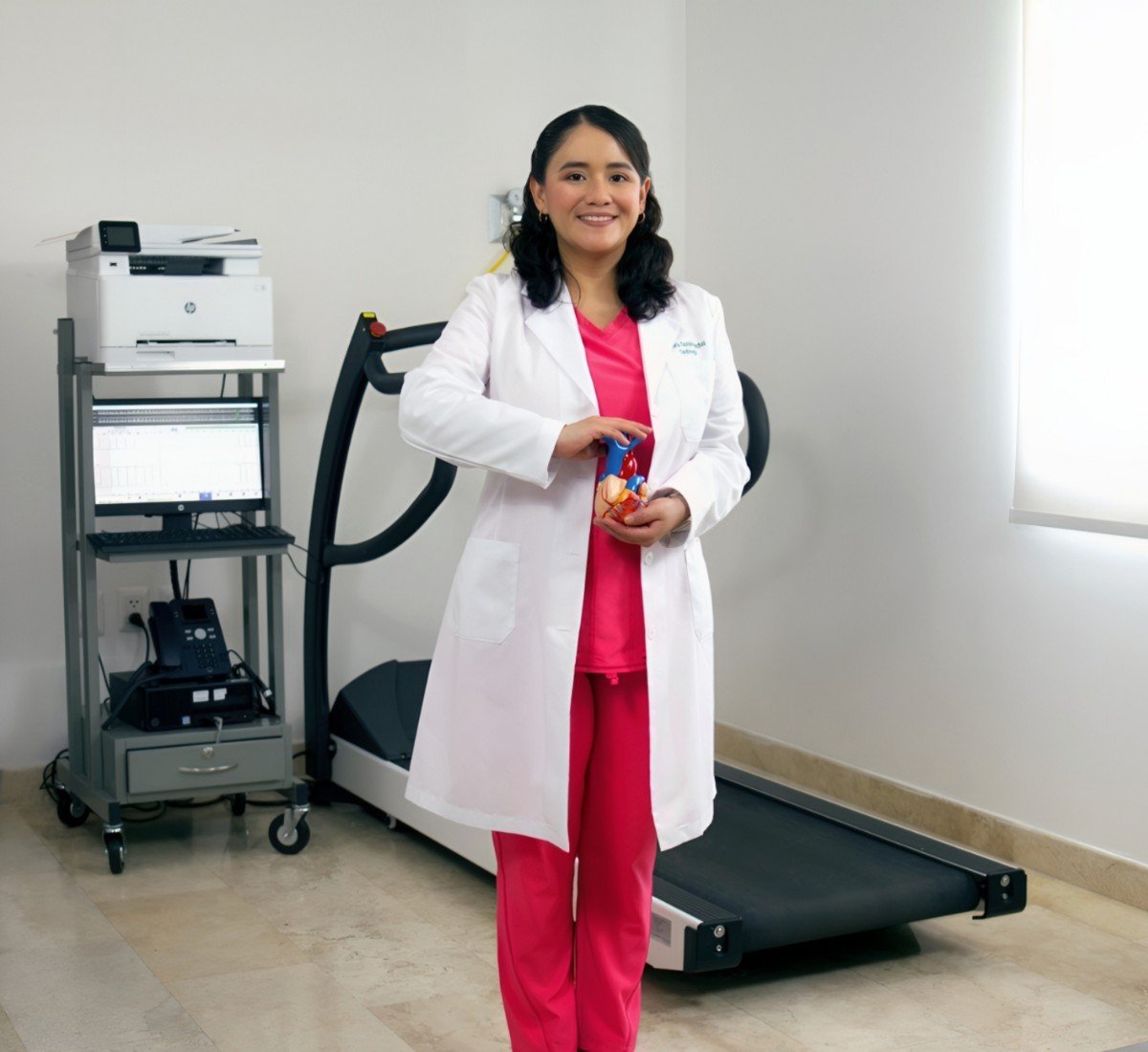
Train Safely
Calculated Risk + Suitability
What is a pre-sports evaluation?
It is a medical assessment focused on your heart and your safety when exercising. Its purpose is to identify signs that suggest increased risk, clarify symptoms and define recommendations for safe training.
Medical check-up before practicing sports to reduce risks and make informed decisions.
What does the program include?
You are going to start exercising after months of sedentary lifestyle.
You want to increase intensity (marathon, HIIT, competitive).
You are 35+ years old and will be exercising vigorously.
You have hypertension, diabetes or high cholesterol.
You had COVID and were left with fatigue or palpitations.
You have had chest pain or dizziness on exertion.
Where is your heart at today?
If you feel chest pain or tightness, palpitations, shortness of breath or notes your blood pressure out of control, If the cause is not clear, a complete cardiologic evaluation is important to clarify the cause.
A) Warning Signals
Chest pain or pressure with exertion, fainting (syncope) while training, disproportionate shortness of breath or palpitations with dizziness.
B) Family Risk
History of sudden or premature death in family members, cardiomyopathies or hereditary arrhythmias that are sometimes ignored.
C) Physical Examination
Review of blood pressure, heart murmurs, pulses and physical signs that warrant further study.
Over 35 years of age: The critical point
In adults, part of the objective is to detect cardiovascular risk related to coronary arteries (silent infarctions) and accumulated risk factors.
What is the process like?
A structured evaluation to give you the green light or define necessary precautions.
-
Definition of objectives
We confirm which sport you will do, how often, with what intensity and from when, in order to adjust the evaluation to your profile.
- Type of sport and level (recreational / competitive)
- Estimated training volume and intensity
-
Clinical review
We analyze symptoms, medications and history, and perform a physical examination focused on cardiovascular safety.
- Alarm symptoms and family history
- Review of current treatment and vital signs
-
Studies (if applicable)
Only if the history or examination suggests risk, we indicate tests to clarify findings (ECG, Stress Test).
- Resting ECG when indicated
- Stress test if it provides useful information
-
Closing and plan
We give you a clear clinical conclusion, safety limits and a follow-up plan according to your objectives.
- Conclusion (pass or pass with recommendations)
- Warning signs, limits and monitoring
Studies that could be indicated
They are not routinely requested: they are indicated when answering a clinical question.
Electrocardiogram
Useful for evaluating rhythm and electrical findings, especially if symptoms are present.
See ECG
Echocardiogram
Assesses structure and function when additional information is required (murmurs).
See Echocardiogram
MAP 24 Hours
It is indicated if we suspect hypertension or "pressure rising while training".
View MAP
Stress Test
Helps to assess exercise response and functional capacity in selected cases.
View Proof
What you get at the end
Clinical Conclusion
Suitable / Suitable with recommendations / Requires evaluation.
Recommendations
Practices for safe training and suggested intensity.
Indication of Studies
With clear purpose (what we seek to confirm), if applicable.
Follow-up
If we detect relevant risk factors.

When to pause exercise and consult
Pause training and seek medical advice if you experience: chest pain or tightness, fainting, severe shortness of breath or palpitations with dizziness.
What can you expect?
- List of medications and dosage (if taken)
- Previous studies (ECG, echo, recent labs).
- Your sports goal (e.g., "run 10K," "go back to the gym").
- Detail of symptoms: when, duration and activity.
- Family history relevant.
Why with Dr. Karla Castolo?
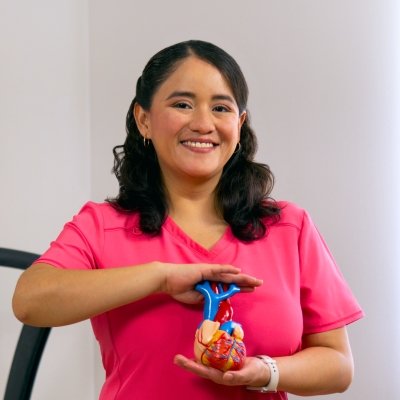
Dr. Karla Castolo
Certified Cardiologist
- Clinical cardiologist with High Specialty in Cardiac Rehabilitation.
- Attention with international standards in Hospiten Puerto Vallarta.
- Human approach: clear explanation, patience and close follow-up.
- Bilingual attention (Spanish / English).