
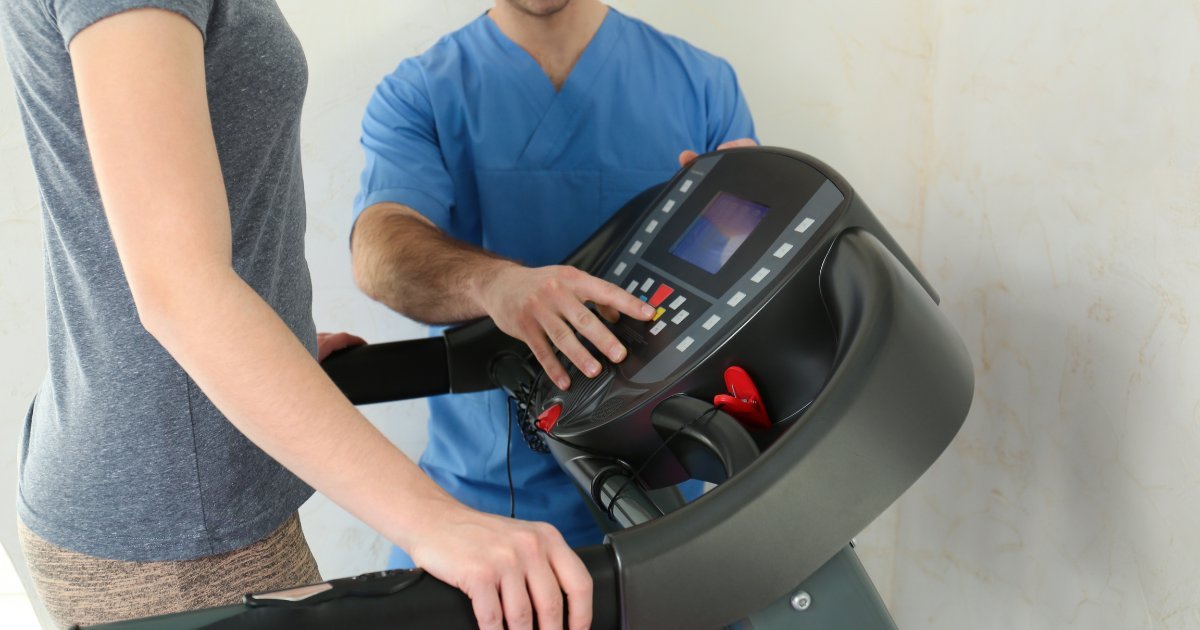
After a heart attack, angioplasty, heart surgery or a diagnosis of coronary artery disease, the question is almost always the same: “and now how do I get back to my normal life without risking it?”. The cardiac rehabilitation is precisely that: it is a program structured to help you to regain physical capacity, reduce risks and gain confidence after a cardiac event.
In this guide you will see what the cardiac rehabilitation in Puerto Vallarta, who benefits the most and what you can expect if you decide to join a supervised program.
Brief notice: This information is general and does not replace an individual assessment. The indication for cardiac rehabilitation should be personalized with your cardiologist.
What is cardiac rehabilitation?
Cardiac rehabilitation is much more than “working out in the gym”:
- It is a structured medical program that combines:
- Supervised physical exercise.
- Education about the disease and treatments.
- Support to modify habits (food, tobacco, stress, sleep).
- It is designed for people with:
- Myocardial infarction or acute coronary syndrome.
- Angioplasty with stenting or coronary artery bypass surgery.
- Stable heart failure.
- Some arrhythmias or valvulopathies according to medical criteria.
Its goal is not only to make you feel “less tired”, but:
- Decrease the probability of a new cardiac event.
- Improve your functional capacity (what you can do on a daily basis).
- Increase your security to resume work, family and, in many cases, physical activity or sports.
If you have already reviewed the Secondary prevention after a heart attack: first 90 days, cardiac rehabilitation is one of the most important pillars of this plan.
For whom cardiac rehabilitation is indicated
Some profiles that especially benefit:
- After a heart attack (with or without stent placement).
- After a heart surgery (bypass, valve repair).
- People with stable angina or documented coronary artery disease.
- Patients with stable heart failure (under cardiological follow-up).
- People with multiple risk factors (hypertension, diabetes, high cholesterol, smoking, obesity) and evidence of heart damage.
It can also be useful if:
- You are afraid to exert yourself for fear of “straining your heart”.
- You have questions about how far it is safe to push your body.
- Have you noticed low exercise tolerance or significant fatigue when trying to resume activities.
In many cases, the recommendation for cardiac rehabilitation is integrated within a cardiological check-up and adapts to your particular situation.
What happens in a cardiac rehabilitation program
Although details may vary by center, a typical program includes:
Initial evaluation
- Complete medical history and review of your previous studies.
- Physical examination, measurement of blood pressure and heart rate.
- In many cases, a Stress test or equivalent study to define safe exercise intensity.
Based on this, a customized plan, not a “one-size-fits-all package”.
Supervised exercise sessions
- They are performed in a controlled environment (treadmill, stationary bike, ergometers, circuit walking).
- Your heart rate, blood pressure and symptoms are monitored before, during and after exercise.
- The program progresses gradually in:
- Duration of the sessions.
- Intensity of effort (always within safe ranges).
Education and accompaniment
- Explanations about your diagnosis and treatments.
- Specific recommendations on diet, medication, blood pressure and cholesterol control.
- Stress, sleep and emotion management after a cardiac event (very important and underestimated).
Maintenance plan
At the end of the supervised program, a scheme is designed to long-term physical activity so that you can maintain the benefits without always relying on the hospital environment.
Expected benefits of cardiac rehabilitation
Evidence has shown that patients who complete a cardiac rehabilitation program:
- They have lower risk of cardiovascular death and new heart attacks.
- They require fewer hospitalizations in the future.
- They recover better their effort capacity (climbing stairs, walking longer distances, resuming activities).
- They live less constrained by fear (“I don't move because I don't know if something will happen to me”).
- In many cases, they improve mood, anxiety and sleep quality.
Cardiac rehabilitation is not a substitute for medications or interventions you have already undergone, but the powermakes the investment in your treatment more profitable in the long run.
How cardiac rehabilitation is experienced in Puerto Vallarta
Rehabilitation in Puerto Vallarta has practical particularities:
- Climate and environmentwarm weather that allows, when it is safe, to integrate outdoor walks at certain times of the day, always following your cardiologist's indications (taking care of hours of heat and humidity).
- Medical tourismSome people travel to combine their recovery with a more relaxed environment, but this is not always the case. requires medical planning, not improvisation.
- It is important to coordinate:
- Previous studies (e.g, Stress test).
- Length of stay in the city.
- Continuity of the plan when you return to your place of residence.
If you live permanently in or around Vallarta, rehabilitation can be integrated as part of your weekly routine, with a progressive transition to more independent exercise as you progress.
How to know if you are a candidate for cardiac rehabilitation
You could especially benefit if:
- You had a infarction in recent months.
- You had a angioplasty with stent or bypass surgery.
- You have hypertension, diabetes and high cholesterol and your cardiologist has already documented coronary artery disease.
- You notice that any moderate exertion leaves you feeling very tired or short of breath.
- You are afraid to go back to work, travel or exercise for fear of “overtaxing your heart”.
In these cases, the logical next step is a directed cardiologic evaluation (e.g., through a cardiological check-up) to decide if cardiac rehabilitation is right for you and at what stage to start.
Warning signs: when not to wait for the next session
If you are in cardiac rehabilitation or in the process of recovery, seek immediate attention if you present:
- Oppressive chest pain that does not subside at rest.
- Intense shortness of breath or sudden choking sensation.
- Fainting or loss of consciousness.
- Acute neurological deficits (slurred speech, deviation of the mouth, loss of strength on one side of the body).
These scenarios require urgent assessment, not just adjust the exercise plan.
What does a good result look like after cardiac rehabilitation?
At the end of a well-structured program, the expected outcome is:
- To be able to do more of your daily activities without exhausting yourself.
- Better understand your diagnosis and treatment.
- Saber what kind of exercise you can do, how much, and within what limits.
- Have better controlled blood pressure, cholesterol and glucose (when this is part of the plan).
- Feel more confident to resume work, travel and social life.
If you have had a cardiac event or your cardiologist has already talked to you about rehabilitation, you can learn more about the service at the Cardiac rehabilitation or use the contact to resolve doubts and schedule an initial assessment.
References (clickable)
- Anderson L. et al. Exercise-based cardiac rehabilitation for coronary heart disease. European Heart Journal.
https://academic.oup.com/eurheartj/article/44/6/452/7028725 - Brown T.M. et al. Core Components of Cardiac Rehabilitation Programs. Circulation.
https://www.ahajournals.org/doi/10.1161/CIR.0000000000001289 - 2023 AHA/ACC Guideline for Chronic Coronary Disease. Circulation.
https://www.ahajournals.org/doi/10.1161/CIR.0000000000001168