
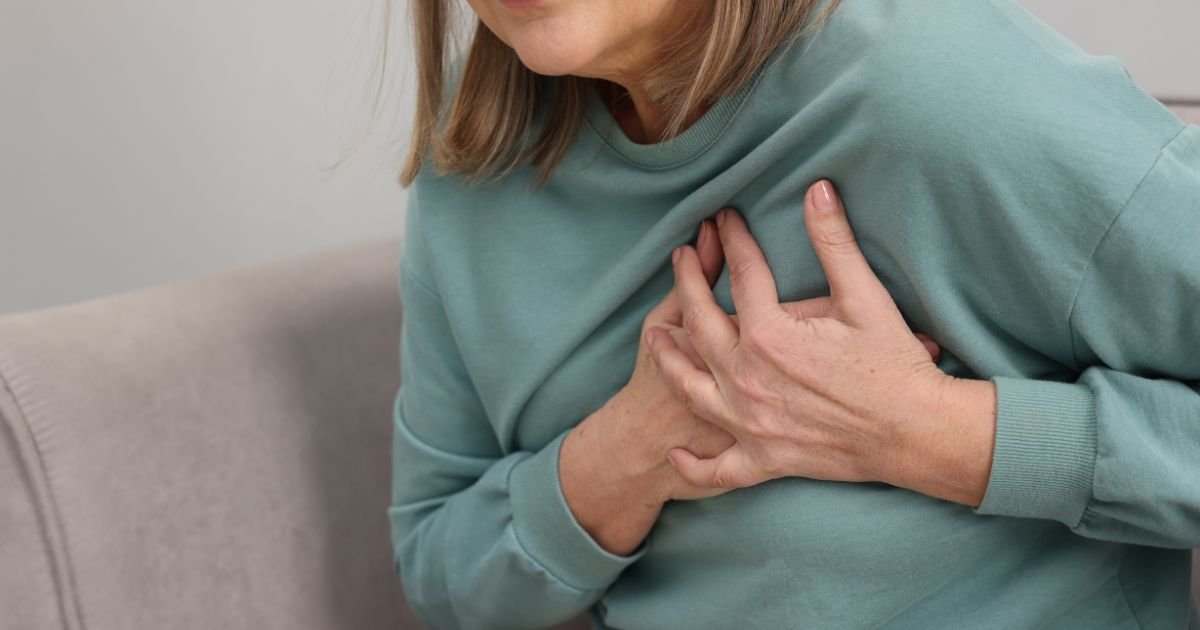
“My heart is racing,” “I feel pounding in my chest,” “It feels like my heart is going to burst out.” The palpitations are one of the most frequent reasons for cardiology consultations and also one of the most anxiety-producing sensations.
In this guide you will see:
- What palpitations can mean.
- Frequent causes, cardiac and non-cardiac.
- What studies help to clarify the diagnosis.
- When it is reasonable to observe and when it is appropriate to go to a cardiologist or to the emergency room.
What exactly are palpitations
We call “palpitations” the conscious perception of the heartbeat. Some people describe them as:
- Very fast heartbeat.
- Strong blows or “hammer blows” to the chest.
- Irregular heartbeat, as if the heart “jogged” or “skipped a beat”.
- Fluttering sensation in the chest or neck.
Key points:
- Not all palpitations mean a serious arrhythmia.
- Nor is everything “just nerves”: the clinical context and the studies are what define its importance.
Common causes of palpitations
Extrasystoles (advanced beats)
They are beats that are ahead of the normal rhythm and are often followed by a short pause. They feel like:
- “A heavy blow” to the chest.
- “It stopped me for a moment and then hit really hard.”.
In people with structurally healthy hearts, they are usually benign, although very annoying. Even so, they should be documented:
- With a electrocardiogram (ECG) if they appear during the consultation.
- With a Holter ECG of 24 hours if they are intermittent.
Supraventricular tachycardias
These are fast-paced episodes that begin and end abruptly:
- Suddenly the heart races very fast, sometimes with tightness or discomfort.
- The episode may last seconds or minutes.
Many are treatable with maneuvers, drugs or, in selected cases, electrophysiological studies. To document them, the Holter or, if they are very sporadic, other event monitors are usually key.
Atrial fibrillation
It is a very common arrhythmia, especially in people with:
- Hypertension, obesity or sleep apnea.
- Structural heart disease.
- Advanced age.
It is characterized by a rhythm:
- Irregular, sometimes fast, sometimes not so fast.
- It may be accompanied by fatigue, shortness of breath or intolerance to exertion.
It is important to detect it because it is associated with increased risk of brain event. The ECG and Holter are essential to diagnose it.
Non-cardiac causes
It's not all heart problems. They can also cause palpitations:
- Anxiety, panic attacks, intense stress.
- Caffeine, energy drinks, alcohol, nicotine, some recreational drugs.
- Fever, anemia, thyroid disorders.
- Dehydration or intense physical effort without preparation.
The fact that anxiety plays a role does not mean that “everything is psychological”; the prudent thing to do is to first rule out relevant cardiac causes.
Studies that help to clarify palpitations
Depending on your medical history and symptoms, your cardiologist may indicate:
Electrocardiogram (ECG)
- It is a basic and quick study.
- Useful if palpitations are present at the time of the study or if there are baseline changes in rhythm.
- You can learn more on the electrocardiogram (ECG).
24-hour Holter ECG
- Record your heart for a full day (or more, depending on the protocol).
- Ideal when palpitations occur intermittently and are not captured in the office.
- More details in 24-hour Holter ECG (Electrocardiogram)outpatient program).
Cardiac check-up
When, in addition to palpitations, there are risk factors (hypertension, diabetes, high cholesterol, family history), a more complete assessment is recommended:
- Detailed medical history.
- Physical examination and blood pressure.
- ECG and, as appropriate, echocardiogram, laboratory studies and stress tests.
This is integrated within a check-up cardiologico.
In many cases, the key is to correlate what you feel with what you see in the traceIf at the time of palpitation the ECG shows a significant arrhythmia, the management will be different from when the rhythm is completely normal.
When to observe and when to consult an outpatient
May be reasonable observe and record (without immediate alarm) when:
- The palpitations are brief, sporadic and clearly related to coffee, lack of sleep, acute stress or occasional exertion.
- They are not accompanied by chest pain, shortness of breath or dizziness.
- You have no known history of heart disease.
Even so, if they become frequent or worrisome, a scheduled office evaluation is a good idea.
It is convenient consult your cardiologist in the coming weeks, yes:
- The palpitations are recurrent, last several minutes or force you to stop activities.
- They are accompanied by a feeling of “emptiness in the chest”, slight dizziness or unusual fatigue.
- You have hypertension, diabetes, high cholesterol, thyroid disease or a family history of arrhythmias or sudden death.
In these cases, you can schedule a cardio check-uplogical to integrate symptoms, risk factors and studies.
When to go to the emergency room
You should seek immediate attention if palpitations are accompanied by:
- Intense chest pain or tightness.
- Significant shortness of breath or choking sensation.
- Fainting or loss of consciousness.
- Marked weakness on one side of the body, slurred speech or sudden visual loss.
- Very rapid and sustained palpitations with intense dizziness, cold sweats or a feeling of faintness.
In these scenarios, the priority is the urgent assessment and record the rhythm at that time.
What a good plan looks like in the face of palpitations
In practice, proper management usually includes:
- Detailed clinical history (when they started, what they are associated with, history).
- Baseline ECG and, if necessary, 24 h Holter or other types of monitoring.
- Evaluation of risk factors and associated diseases (thyroid, anemia, anxiety, stimulant use).
- Clear plan:
- Reassure when the findings are benign.
- Treat arrhythmias that require it.
- Define whether periodic cardiology follow-up is needed.
If palpitations have become a constant concern or are already limiting your activities, you can use the form of contact to schedule an assessment and define, with objective data, what is going on with your heart.
References
- Al-Khatib S.M. et al. 2017 AHA/ACC/HRS Guideline for Management of Patients With Ventricular Arrhythmias and the Prevention of Sudden Cardiac Death.
https://www.ahajournals.org/doi/10.1161/CIR.0000000000000549 - Page R.L. et al. 2015 ACC/AHA/HRS Guideline for the Management of Adult Patients With Supraventricular Tachycardia.
https://www.ahajournals.org/doi/10.1161/CIR.0000000000000311 - January C.T. et al. 2019 AHA/ACC/HRS Guideline for the Management of Patients With Atrial Fibrillation.
https://www.ahajournals.org/doi/10.1161/CIR.0000000000000665